
Why Two Lash Techs Can Use the Same Lash Map and Get Completely Different Results
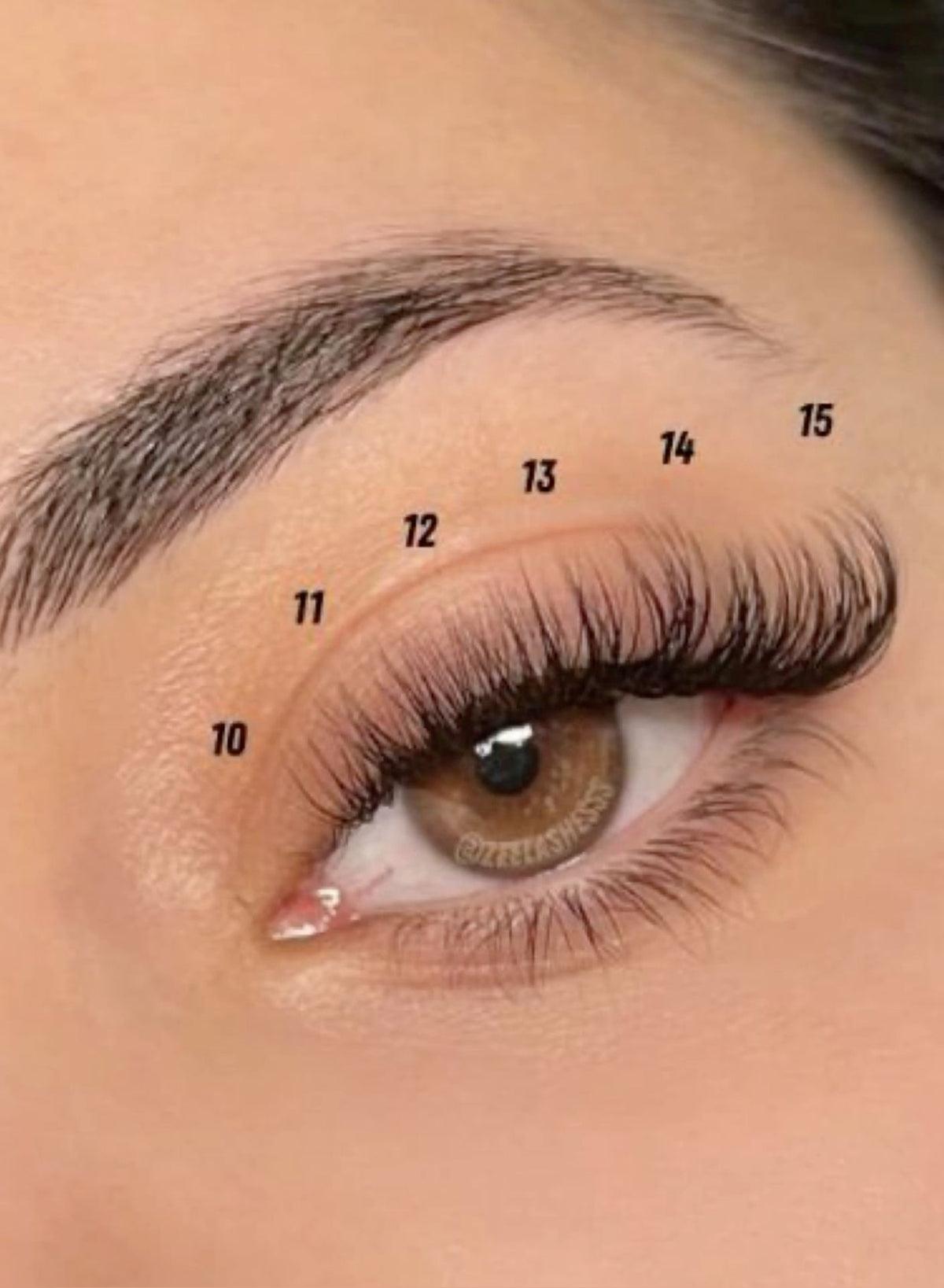
Why Two Lash Techs Can Use the Same Lash Map and Get Completely Different Results
Ever wondered why you and another lash tech can use the exact same lash map but end up with two completely different sets?
It’s not necessarily because one of you is doing something “wrong”. A lash map is simply a starting point — the final result depends on much more than the numbers written on your mapping sticker.
From placement and direction to lash selection, isolation and the client’s natural lashes, there are countless variables that can change how a set looks.
Here’s why the same lash map can create completely different results.
1. Lash placement makes a huge difference
One of the biggest factors is where the extension is actually placed on the natural lash.
Even if two techs use the same lengths and curls, one might place their extensions slightly higher, lower, more towards the base or at a different angle.
Small differences in placement can change:
-
The direction of the lashes
-
How open the eyes appear
-
The overall density
-
The shape of the lash line
-
How dramatic the set looks
Your lash map might say 8mm, 9mm, 10mm, 11mm — but those numbers don't tell the whole story.
Placement is just as important as length.
2. The client's natural lashes aren't identical
A lash map doesn't account for every natural lash on a client's eye.
Natural lashes can vary dramatically in:
-
Length
-
Thickness
-
Growth direction
-
Density
-
Curl
-
Growth cycle
One client might have naturally long, straight lashes, while another has shorter lashes that point downwards.
Even if you follow the same map on both clients, the finished sets will naturally look different.
This is why copying a map from an inspiration photo doesn't always recreate the exact same look.
The map needs to work with the natural lashes underneath it.
3. Lash curl changes the appearance
The curl you choose can completely transform the finished result.
For example, an L curl and a C curl may be the same length, but they won't necessarily create the same visual effect.
A stronger curl can make the set appear:
-
More lifted
-
More dramatic
-
More open
-
Shorter visually
Meanwhile, a softer curl can create a more relaxed and natural appearance.
So when two techs use the same lengths but different curls, they're technically following the same map — but visually, they're creating something different.
4. Direction matters more than you think
Two lash extensions can be the same length and curl but look completely different depending on their direction.
If extensions are directed slightly outwards, upwards or towards the centre of the eye, they can alter the overall shape of the set.
This is particularly important when creating styles such as:
Cat eye • Doll eye • Squirrel • Wispy • Wet look
The map gives you the basic structure, but your direction creates the finish.
5. Fan size and volume affect density
With volume and hybrid sets, the number of lashes used can make a huge difference.
Imagine two techs both following a 9–12mm map.
One creates smaller, lighter fans.
The other creates larger, fuller fans.
The lengths are identical, but the overall result won't be.
Density can change how:
-
Dark the lash line appears
-
Full the set looks
-
Defined the eye shape becomes
-
Wispy or fluffy the finish appears
This is why a lash map shouldn't be treated as a complete recipe.
6. Isolation and attachment can change the finish
The quality of the application also plays a major role.
If lashes aren't properly isolated, or extensions aren't attached consistently, the finished set can look messy regardless of how good the map is.
Clean, consistent attachment helps create that polished, expensive-looking finish that lash techs aim for.
A great lash map paired with inconsistent application won't give you the same result as a great lash map paired with precise technique.
7. Every tech has their own technique
Lash extensions are a skill — and every tech develops their own way of working.
Two techs may have different:
-
Pickup techniques
-
Placement habits
-
Isolation techniques
-
Fan-making styles
-
Direction preferences
-
Lash selection
-
Styling experience
That's why you shouldn't expect your set to look exactly like another tech's just because you've followed their map.
Instead, use other techs' maps as inspiration and guidance, then adapt them to your own technique and your client's eyes.
8. The eye shape changes everything
A lash map that looks amazing on one eye shape might not have the same effect on another.
For example, hooded, round, almond and downturned eyes can all respond differently to the same styling.
This is why mapping should be personalised.
Rather than simply asking:
“What lash map should I use?”
Ask:
“What styling will create the effect I want on this particular client?”
That small change in thinking can completely transform your results.
A lash map is a guide — not a guarantee
The biggest takeaway?
The numbers on the map aren't what create the final set. You do.
Your client's natural lashes, eye shape, lash curl, thickness, direction, fan size and application technique all contribute to the finished result.
So if you've ever followed an amazing lash map from another tech and wondered why yours doesn't look the same, don't panic.
It doesn't mean your work is bad.
It means there's much more to lash styling than simply following a row of numbers.
The best lash techs don't just follow maps.
They understand how to adapt them.
Final thought
Think of a lash map as a blueprint, not a finished building.
Two people can follow the same blueprint and still create something slightly different — because the skill, technique and materials used to bring it to life matter just as much.
Master the fundamentals, understand your client's features and learn how to adapt your maps.
That's when your lash sets really start to become your own.
Comments