
When a Client’s Inspiration Photo Is Actually the Wrong Lash Style for Them
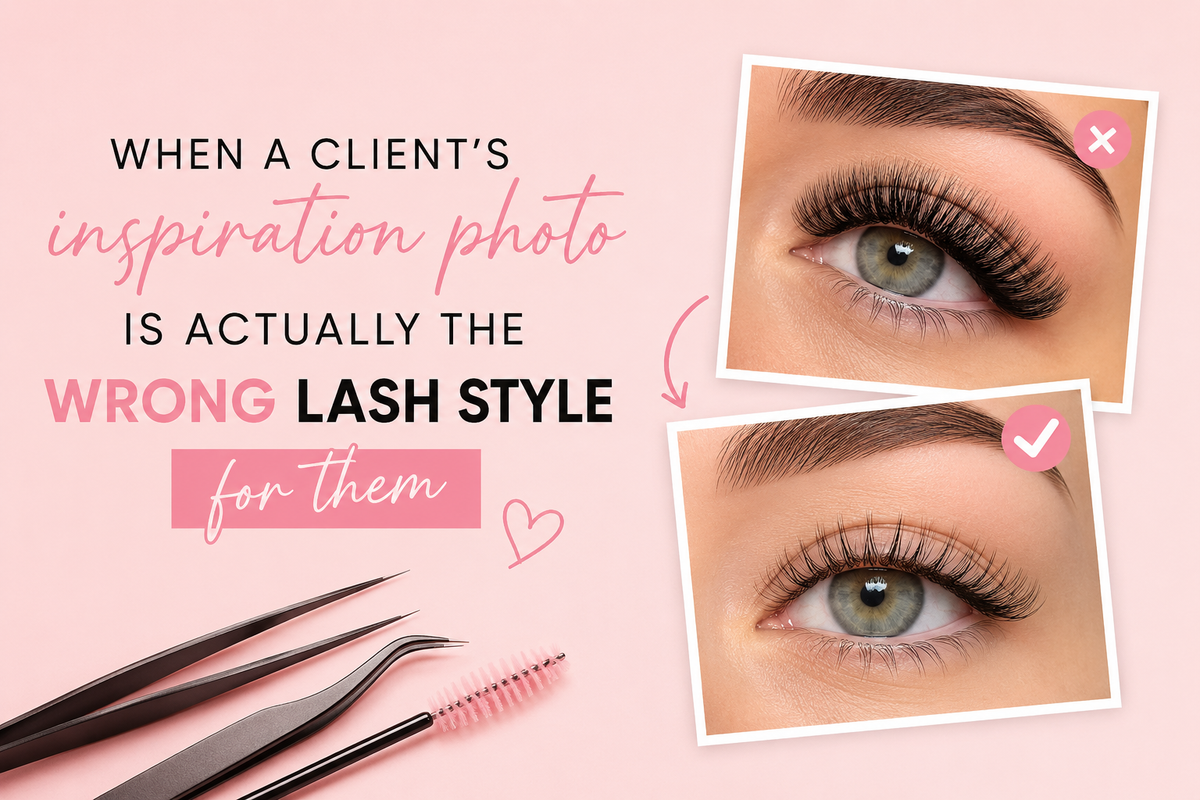
We’ve all had the client who arrives with the inspiration photo.
They know exactly what they want. They’ve saved it from Instagram, Pinterest or TikTok, and they’re expecting you to recreate it perfectly.
But there’s one problem…
The lash style in the photo might not actually be suitable for their natural lashes, eye shape or desired result.
As a lash tech, part of your job isn’t simply recreating a picture. It’s understanding what will work for the individual client sitting in front of you — and sometimes that means adapting their inspiration photo into something that suits them better.
An Inspiration Photo Is Just That — Inspiration
A client may show you a set with dramatic volume, a strong cat-eye or incredibly long lashes and say, “I want exactly this.”
But the person in the photograph may have completely different:
- Eye shape
- Natural lash length
- Natural lash thickness
- Lash direction
- Lash density
- Eyelid shape
- Face shape
- Styling preferences
There’s also the fact that lighting, editing, makeup and even the angle of the photograph can dramatically change how a lash set looks.
Instead of treating the photo as a blueprint, use it to understand what your client likes about the look.
Maybe they love the fluffy appearance. Maybe they like the lifted outer corner. Maybe they want a darker lash line.
Once you know why they like the photo, you can create a version that works for them.
Eye Shape Can Completely Change the Result
One of the biggest reasons an inspiration photo may not translate perfectly is eye shape.
A style that beautifully lifts one client’s eyes could make another client’s eyes appear heavier or more downward-facing.
For example, a dramatic cat-eye effect can look amazing on some eye shapes, but placing progressively longer extensions towards the outer corner isn't automatically the best choice for every client.
This is where mapping becomes so important.
Rather than copying the exact lengths from an inspiration photo, consider how your mapping can enhance the client's natural features.
Think about:
Round eyes:
A softer, elongated map can help create a more balanced appearance.
Downturned eyes:
Be careful with excessive length at the very outer corner, as this can emphasise the downward direction.
Hooded or deep-set eyes:
Curl selection and placement can make a huge difference to how visible the extensions are.
Almond eyes:
These often give you plenty of flexibility, but the final map should still be based on the client's natural lashes and desired finish.
The goal isn't to force every client into the same trending style.
It's to create a style that works with their features.
Natural Lash Health Comes First
Sometimes the inspiration photo simply isn't realistic for the client's natural lashes.
They might show you an extremely long, dense volume set, but their natural lashes may be finer, shorter or unable to safely support that level of weight.
This is where professional judgement matters.
Your client might love the appearance of the set, but that doesn't mean you should copy every length, diameter or volume level.
Instead, look at the overall effect.
Could you create a similar dark and fluffy finish using lighter extensions?
Could a different fan structure create the density they're looking for?
Could slightly shorter lengths give them a similar shape while keeping the set more appropriate for their natural lashes?
The inspiration is the starting point. Their natural lashes determine the limits.
Curl Choice Matters Too
Sometimes the problem isn't the length — it's the curl.
A client might bring you a photo with a very lifted curl and expect the same result, but their natural lash direction or eyelid structure may mean another curl would create a more flattering finish.
Different curls can dramatically change:
- How lifted the eyes appear
- How open the eyes look
- How visible the extensions are
- The overall softness or drama of the set
- How the extensions sit against the natural lashes
Don't choose a curl purely because it's visible in the inspiration picture.
Choose it because it works for your client's natural lashes and eye area.
What About Mega-Long Lashes?
Longer doesn't automatically mean better.
A client might show you a set with extremely long extensions because they love the dramatic effect.
But adding more length isn't always the answer.
Excessive length can overwhelm smaller eyes, make the set look heavy or place unnecessary stress on the natural lashes.
Instead, think about proportion.
Sometimes reducing the length slightly while choosing the right curl and density can create a much more flattering result, while still giving the client the dramatic look they wanted.
The Client Wants "Wispy" But Their Inspiration Is Actually Volume
Another common situation is when a client describes their desired set using one word, but their inspiration photo tells a completely different story.
They might say:
“I want something natural but fluffy.”
Then show you an extremely dense volume set.
This is why consultation is so important.
Ask questions such as:
“What do you like about this set?”
“Is it the fullness, the length, the shape or the texture that you like?”
“Do you want this exact look, or something similar that's more suited to your eyes?”
These questions help you understand the result they're actually looking for.
Don't Be Afraid to Say No
One of the most professional things a lash tech can do is explain when something isn't suitable.
That doesn't mean simply saying:
“No, I can't do that.”
Instead, explain why and offer an alternative.
For example:
“I love this style for you, but I wouldn't recommend copying the exact lengths because your natural lashes are finer. We can create a similar fluffy effect with a slightly shorter and lighter set.”
This keeps the client involved while showing that your recommendation is based on professional knowledge rather than simply refusing their request.
Turn the Inspiration Into a Custom Set
The best lash artists aren't necessarily the ones who can copy a picture perfectly.
They're the ones who can look at a picture and think:
“How can I recreate the feeling of this look for this particular client?”
Take inspiration from:
- The overall shape
- Density
- Texture
- Curl
- Length
- Darkness
- Styling
- Inner and outer corner placement
Then adapt each element to the client's individual features and natural lashes.
That might mean changing the lash map, shortening certain areas, using a different curl or choosing a lighter diameter.
And that's okay.
In fact, that's what makes the set custom.
Remember: Your Client Isn't the Model in the Photo
An inspiration photo can be useful, but it's important to remember that you're working with a completely different person.
Different eyes. Different lashes. Different features. Different needs.
So next time a client arrives with an inspiration photo, don't immediately think:
“How do I copy this?”
Instead, think:
“What is it about this set that they love, and how can I recreate that effect safely and beautifully for them?”
Because the best lash set isn't necessarily the one that looks exactly like the photo.
It's the one that looks like it was made for them.
Comments